WILLAMETTE VALLEY
PINOT NOIR
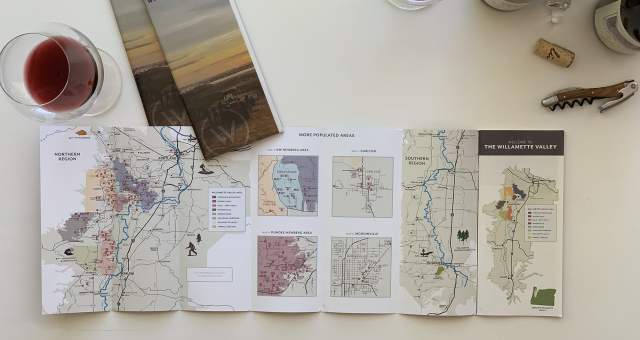
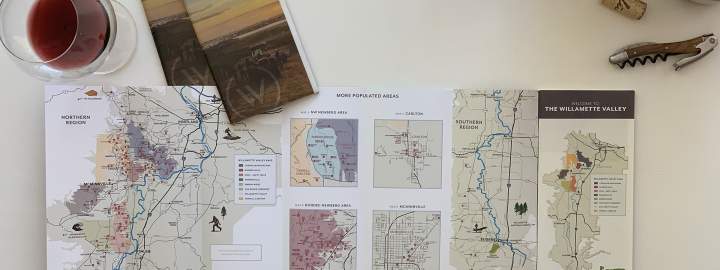
The Willamette Valley, home to more than two-thirds of Oregon’s vineyards and wineries, is the heart of the state’s wine industry and one of the world’s leading regions for Pinot noir. Its reputation is no accident. It is the result of geology, climate, and the vision of early pioneers who recognized the valley’s remarkable potential.
Geologically, the valley is a mosaic shaped by millions of years of natural forces. Ancient volcanic activity from the Cascade Range produced basalt bedrock and iron-rich Jory soils, now prized for Pinot noir. Later, massive Missoula Floods swept across the region at the end of the Ice Age, depositing layers of marine sediment and creating the low-lying south-to-north corridor we know today. This rare convergence of volcanic and sedimentary soils provides exceptional drainage, moderate fertility, and complex mineral profiles, key conditions for producing nuanced, site-expressive wines.
The valley’s geography adds another layer of distinction. The Coast Range shields vineyards from the cold Pacific Ocean, moderating rainfall and preventing extreme temperature swings. To the east, the Cascade Range protects against the arid, desert-like conditions of central Oregon. Between these mountain barriers, the valley stretches for more than 100 miles along the Willamette River, creating a protected, temperate agricultural zone.
Scientifically, the Willamette Valley occupies the same latitude as Burgundy, around 45°N, placing it within the world’s most favorable band for cool-climate viticulture. The region experiences a long growing season defined by:
- Warm but not hot summer days
- Dramatically cooler evenings that preserve acidity
- An extended, dry autumn ideal for slow, even ripening
- Mild winters that safeguard vine health
- Long, steady springs that support early growth
This climatic pattern produces grapes with balanced sugars and acids, refined tannins, and the aromatic complexity for which the region is known.
It was this interplay of soils, climate, and latitude that inspired wine growing pioneers to plant the Willamette Valley’s first Pinot noir vines more than fifty years ago. David Lett, who famously studied Burgundy’s climate data before choosing Oregon, believed the valley’s conditions mirrored those of Europe’s most storied Pinot noir region. Charles Coury brought with him the now-famous “Coury theory”, that cool-climate varieties must be grown in places where they are just barely able to ripen, yielding wines of elegance and character.
Their instincts proved correct. What began as a daring experiment in the 1960s has become a globally recognized wine region celebrated for precision, purity, and a deep sense of place.